

How Online Therapy for Caregivers Helps Manage a Burnout
You remember the medication schedule, doctor’s appointment time, grocery list, insurance call, school deadline, work request, and the needs of everyone around you. Yet when someone asks how you feel, your mind goes blank.
A caregiver provides ongoing personal, physical, practical, or emotional support to someone who is elderly, ill, injured, or living with a disability. This may include unpaid care from family or friends, as well as professional support from trained care providers.
When caregivers manage another person’s needs with limited time, rest, or outside help, the pressure can become overwhelming. Caregiver burnout often begins quietly, until exhaustion, irritability, guilt, or emotional distance start to feel normal. Recognizing these changes is important.
Understanding caregiver burnout therapy and how a therapist can help—can be an important step toward finding healthier ways to manage the emotional demands of caregiving while making space for your own well-being.
Caregiver Burnout Signs That Hide in Daily Life
Caregiver burnout means physical, mental, and emotional exhaustion caused by care demands that continue without enough relief. It can affect a spouse who supports a partner, an adult child who helps a parent, a parent who cares for a child with complex needs, or a professional who provides direct care throughout the workday.
The signs do not always look dramatic. Many caregivers still arrive on time, complete every task, respond to every call, and solve each new problem. Professional caregivers may continue to provide safe care even as their own emotional reserves run low. The change often appears in the personal cost of that effort.
Emotional Caregiver Burnout Signs
- You feel irritated by small requests that once felt manageable.
- You feel numb, detached, or unable to offer warmth.
- You resent the person, other relatives, or anyone who has more freedom.
- You feel guilty after anger, rest, pleasure, or time away.
- You dread the next call, appointment, or change in symptoms.
- You no longer recognize yourself outside the caregiver role.
These reactions can scare a caring person. They do not automatically mean that love or passion had disappeared. They often mean that emotional capacity has reached its limit.
Physical and Behavioral Caregiver Burnout Signs
- Sleep does not restore your energy.
- Headaches, stomach tension, body pain, or frequent illnesses appear more often.
- You skip meals, appointments, medications, or basic care for yourself.
- You withdraw from friends because conversation feels like one more demand.
- You use food, alcohol, shopping, or endless scrolling to shut off your thoughts.
- Your work suffers, or you cannot focus even during quiet moments.
National caregiver data show the scale of this pressure. 64% of caregivers report emotional stress, and one in five report poor health. These figures describe a system-level problem, not a personal failure.
Caregiver Burnout and Compassion Fatigue Feel Different
Stress says, “I have too much to do.” Burnout says, “I have nothing left.” Compassion fatigue can add another layer: another person’s pain starts to overwhelm your ability to feel and respond. You may become emotionally flat, impatient, or distant because your mind tries to protect itself from constant distress.
Caregiving expert Amy Goyer calls part of this experience secondhand stress. The person you care for feels fear, pain, anger, or grief, and the caregiver begins to absorb those emotions. She described it as feeling as though she lived four people’s lives. That language matters because many caregivers assume every emotion belongs to them. Sometimes the emotional boundary between two people has simply become too thin.
Why Caregiver Burnout Grows When Every Role Collides
A caregiver may begin the day before sunrise, help a parent dress, answer work messages, attend a medical visit, pick up a child, manage dinner, review bills, and wake at night after a fall alert. Family members may still ask why a call went unanswered or why the house looks different.
No planner can create time that does not exist. Burnout often reflects stacked roles, not weak organization. It also grows when one person carries the emotional labor: noticing changes, anticipating problems, calming conflict, updating relatives, and making decisions that no one else wants to make.
Recent research also links burnout with self-stigma and unmet needs. In plain terms, guilt can make support harder to accept. A caregiver may believe, “I should handle this,” even when the current care plan requires more than one person can safely provide.
How Therapy for Caregivers Creates Emotional Clarity
Therapy for caregivers offers a place where you do not need to protect anyone else from your truth. You can say that you feel angry, trapped, relieved, lonely, or afraid. A skilled therapist can hold those feelings without turning them into a verdict about your character.
Counseling for caregivers can help you separate responsibility from guilt. It can also help you notice the thought patterns that keep you on constant alert, set limits with relatives, prepare for hard conversations, and make room for grief. Caregiver therapy may also support decisions about work, respite, family roles, and what you can no longer carry alone.
At Texas Online Counseling, we believe caring for the caregivers starts with respect for the full person behind the role. You deserve support that recognizes your love, your fatigue, your anger, your loyalty, and your need for a life that still belongs to you.
Why Online Therapy for Caregivers Fits a Full Schedule
Traditional care can feel impossible when you cannot leave someone alone, drive across town, or promise that an emergency will not interrupt the day. Online therapy for caregivers removes the commute and lets you connect from a private space that fits your comfort bubble.
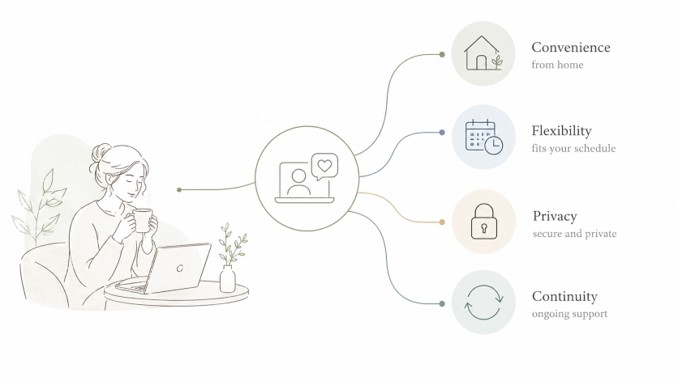
Virtual counseling for caregivers can offer four practical benefits:
- Convenience: You can attend from home or another private location.
- Flexibility: You can choose a time that works around care and work demands.
- Privacy: You can speak without entering a local waiting room or explaining an absence.
- Continuity: You can keep support in place even when the care schedule changes.
A 2026 systematic review found that interactive digital support produced modest but variable benefits for caregiver burden and depressive symptoms. The key word is support. An app or worksheet may help, but many caregivers need a human relationship where someone listens, notices patterns, and responds to the life in front of them.
Virtual caregiver consultations let you explore fit before ongoing care. People may search for a therapist for caregivers near me or counseling for caregivers near me, yet secure online care expands access across Texas without another trip.
When Caregiver Counseling Should Not Wait
You do not need to wait for a breakdown. Consider caregiver counseling when anger feels hard to control, sleep remains poor, anxiety follows you through the day, or you feel detached from the person you support.
Counseling can help even when you cannot change the diagnosis, family system, or care demands right away. Therapy can help you decide what belongs to you, what needs to change, and what support you need next.
Seek help soon if you feel hopeless, cannot function, rely on substances to cope, or fear that stress may affect safety.
Janet Buchanan, MA, LPC, NCC

Janet Buchanan is a Licensed Professional Counselor and National Certified Counselor with more than 30 years of experience. At Texas Online Counseling, she supports caregivers who feel overwhelmed, emotionally exhausted, or stretched too thin. Her approach helps clients process guilt, set healthier boundaries, manage stress, and find greater clarity while they continue to care for the people who depend on them. |
Caring for the Caregivers Starts with One Honest Step
You may not have a full afternoon for self-care. Start with one honest sentence: “I cannot keep doing this in the same way.” That sentence does not end your commitment. It opens the door to a safer version of it.
Ask one person for one task. Protect one small block of time. Write down the thought that returns most often, then bring it to someone who can help.
Texas Online Counseling provides online counseling services for caregivers across Texas. Our therapists offer a private, judgment-free place to address burnout, stress, guilt, grief, boundaries, and the emotional weight of care. Schedule a consultation with Janet Buchanan to learn whether virtual counseling for caregivers fits your needs and availability.
Frequently Asked Questions About Caregiver Burnout
How do I know whether I need caregiver therapy?
Caregiver therapy may help when stress changes your sleep, mood, health, relationships, work, or ability to feel present. You can also start before symptoms become severe.
Can counseling caregivers reduce guilt?
Counseling caregivers can help them examine unrealistic responsibility, set fair limits, and accept support without treating every personal need as selfish.
Does virtual counseling for caregiver’s work?
Research on digital and video-based caregiver support shows promising, though varied, benefits. A therapist can help tailor support to your needs, risks, and daily reality.
What if I feel resentment toward the person I care for?
Resentment often signals unmet needs, loss of choice, or an unfair share of responsibility. A therapist can help you address it without shame and protect the relationship where possible.
